
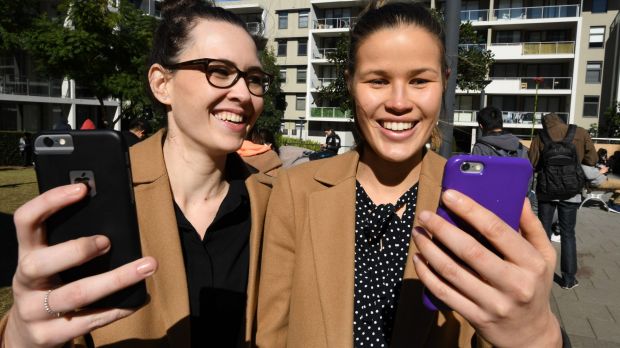
The streets, parks and shopping centres of Austrlalia’s cities and suburbs have become infested with a new urban species: the “Pokemon Go” player.
Ambling about with phones held aloft, these specimens have their eyes glued to their screens, seemingly incapable of viewing their surroundings. Their unpredictable roaming has brought chaos and scorn, and they’ve walked into ponds and police stations, off a cliff and into criminals’ traps.
I should know: I’m one of them, and I can’t help but get excited about the way this game ― often on the fritz and causing all sorts of trouble in the real world ― is breathing life into overlooked public spaces.
We’ve Been Trying To Make Cities Walkable For Years. ‘Pokemon Go’ Did It Overnight.
Millions of people are playing Nintendo’s augmented reality app, where you hunt for Pokemon as your on-screen character mirrors your real-world movements on a map.
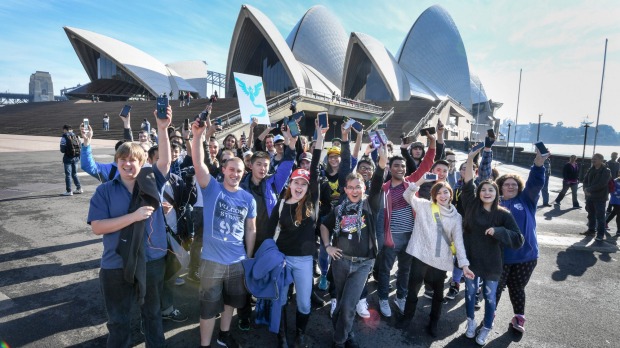
As they play, human “trainers” wander around neighborhoods to search for the cartoon creatures, meeting other players by chance in public parks and gathering “Poke balls” at local historic and cultural landmarks. They’re going on long walks they’d never take otherwise, and adventuring into new parts of their cities.
That’s not all that remarkable, but it’s a total reversal from the way most Australians typically get around. For decades, cities have made accommodations for cars at the expense of walking, biking and public transit, creating streets where walking feels unsafe, unappealing or impractical.
But even if many people want to walk, most don’t. More than 88 percent of all daily trips in the Australia were taken by car in 2012, and in 2015 only 35 percent of kids were walking to high school each day this is down 48 percent since 1980.But what urban planners and forward-thinking councils have struggled to accomplish with development or pedestrian-safety infrastructure, Nintendo seems to have done for thousands of places and millions of people in just a few days ― even if it doesn’t last.
24 year old gamer who uses the handle Daront, regularly drives to national parks and areas outside his hometown of Sydney to bush walk with his girlfriend. Since they started playing “Pokemon Go,” however, they’ve explored Sydney on foot, checking out more than a dozen parks and suburbs they’d never seen.
A few days ago, he noticed the “Pokemon Go” effect at a small park with a pond and trail that he passes daily on his commute.
“To see it empty all the time, I would just think, ‘Oh man, it’s such a shame it’s not being put to use,’” he said. “But now it’s full of people.”
“Pokemon Go” gives people opportunities to walk around and have spontaneous encounters and social interactions, which can be one of the best parts of urban life.
“The reason why people in New York, or Paris, or other highly walkable cities, walk a lot is because they’re dense, and there’s a lot of things to do and the public space is quite lively,” Latorre said.
With Pokemon ― and people chasing them ― popping up unexpectedly on the landscape, even the most homogenous suburban cul-de-sac may offer a mini-digital dose of the excitement found strolling down a Parisian street.
’Pokemon Go’ is this sort of, seemingly overnight activation of public space,” Latorre said. “One of the lessons that can be drawn from this is, well, wouldn’t it be great if some of these activated spaces that I’m sure are empty lots or boring parks … had more variety for play or social gathering spaces.”
Of course, many “Pokemon Go” users are drawn to the game for the nostalgia and the novelty ― not the walking ― and people have figured out hacks to play without moving, or they play while they drive, which is as dangerous as it sounds. So, when the novelty wears off, players may retreat back into their homes and cars. For some, the game is fearful, not playful. Women have been bombarded by unwanted attention from male players who feel emboldened to pester them because they’re both looking for Pokemon, writes Slate’s Laura Hudson.
But the fact that a group of kids prompts neighbors to call the police says a lot more about our low regard for public space ― we think it’s weird when people use it ― than it does about the game. “Pokemon Go” makes you aware of some of the obstacles to having safe, enjoyable public space for everybody, whether by leading you to a Pokestop at an abandoned building, or making you navigate around a freeway interchange as a pedestrian.
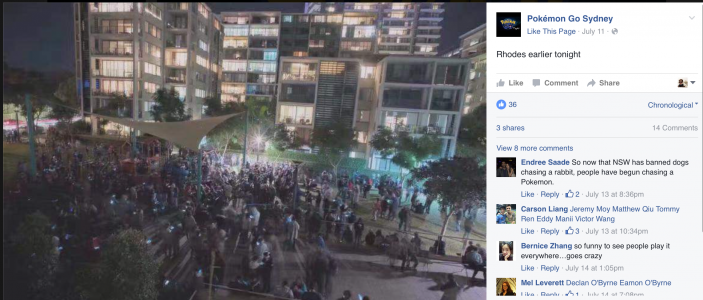
The game has also caused players to wear out their welcome in public space, nearly taking over the Sydney suburb of Rhodes with huge nightly crowds and playing at sites like the Australian War Memorial in Canberra. Those and other disruptions have prompted frustrations with the game’s design as well as with those who are playing.

“The new game provides a wonderful opportunity for people to enjoy the parks, foreshore and other open areas around the City of Canada Bay in a fun, interactive way but we ask people to do this in a safe, considerate manner,” she said.
“Our first concern is for people’s safety, staying alert to their local surroundings: look where they are walking, check for traffic before crossing roads and practice pedestrian safety.
“When playing Pokémon Go, we ask that people do this with consideration to where they are: in residential areas, keep noise levels to a minimum and bin any rubbish.”
NSW Police have been running a social media campaign warning of the impact the game could have, and said it was a message of safety
“New South Wales Police Force has been posting messages via our social media platforms since Friday 8 July 2016 and reposting throughout the weekend,” a NSW Police spokesperson said.
“This has been encouraging people to be aware of their surroundings and not compromise your safety when play.
So are you playing Pokemon Go? Share your experiences !